
Air India Express, Air India, Akasa Air, and IndiGo have cancelled flights to Riyadh, Saudi Arabia, following reported attacks by Houthi militants on Riyadh and Abha airports, with cancellations extended until at least October 9-10.

Due to airspace restrictions resulting from the conflict in the Middle East, Indian domestic carriers have cancelled 278 international flights. Some airlines are operating limited services and special flights to assist stranded passengers.

The broader conflict in West Asia, the largest international market for Indian carriers, has forced a sharp reduction in daily flights relative to the summer schedule.

Indian airlines are expected to cancel 444 international flights due to airspace restrictions in the Middle East following attacks on Iran by Israel and the US. The civil aviation ministry is closely monitoring the situation and coordinating with airlines to ensure passenger safety and minimize disruptions.

India has issued an advisory for its nationals in Saudi Arabia to remain vigilant and stay indoors due to an escalating security situation involving Houthi attacks on civilian infrastructure, including airports. The advisory also cautions against circulating related news and confirms the normal functioning of Indian diplomatic missions. Flight services from India to Riyadh have been cancelled by Air India and Air India Express until October 10 following the attacks.

Air India has extended the cancellation of flights to Saudi Arabia until October 20, 2026, due to escalating tensions and Houthi attacks in the region. IndiGo and Akasa Air have also extended their flight suspensions to Saudi cities, with passengers offered full refunds.

Civil Aviation Minister Kinjarapu Rammohan Naidu stated that no decision has been made regarding allowing Delhi and Mumbai airport operators to own and run airlines, as the government is carefully considering the implications of relaxing cross-ownership restrictions, including potential conflicts of interest and the need for more airlines.

India has issued an advisory for its nationals in Saudi Arabia, urging them to stay indoors during aerial attacks and follow local instructions, amidst ongoing tensions and drone/missile attacks by Houthi rebels. The advisory follows an attack on Riyadh airport that killed one Indian national and injured several others, leading to flight suspensions by Indian carriers.

GE Aerospace is set to significantly increase its supply chain spending in India, targeting USD 400 million by 2030, up from USD 200 million in 2025. This expansion reflects the company's commitment to India's burgeoning aviation market, driven by substantial aircraft orders and the strategic importance of its manufacturing and technology centres in Pune and Bengaluru.

The Civil Aviation Ministry has requested Adani Airports to postpone the partial relocation of international flights from Mumbai to Navi Mumbai airport, a move initially proposed due to renovation of Mumbai's Terminal 1 and opposed by airlines. Discussions are underway to formulate a revised transition plan.
Boeing has identified a software issue in some 737 MAX planes that could disengage the automated flight guidance system after a missed landing approach. The company is developing a permanent solution and has advised operators on interim procedures. Indian carriers Air India Express and Akasa Air operate these aircraft, with Akasa Air stating no impact on their safety.

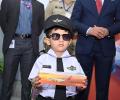
Varthaman, who downed an enemy jet during an aerial combat with Pakistan in 2019 and was held captive for three days in that country, was honoured with the Vir Chakra award in 2021.
Mumbai International Airport is set to reduce 265 weekly international flights from October 25 to facilitate the redevelopment of Terminal 1. This move, impacting 46 airlines including IndiGo and Air India, has raised concerns among carriers and global aviation bodies like IATA, who advocate for collaborative planning over mandated relocations.

Israel has implemented new aviation security directives, barring pilots and cabin crew from countries without diplomatic ties, including Pakistan, from entering its airspace. This follows a hijacking attempt last month on a flight to Israel, where Indian Captain Smit Machchhar was injured while thwarting the plot. The restrictions affect over two dozen nationalities and have prompted airlines like Air France and United Airlines to adjust crew assignments.

India's domestic air passenger traffic experienced a 6.34 per cent year-on-year decline in August, reaching 121.26 lakh passengers, according to data released by the Directorate General of Civil Aviation (DGCA).
India has advised its nationals in Saudi Arabia to 'remain calm and vigilant' due to an evolving security situation, including drone and missile attacks by Yemen's Iran-backed Houthi rebels, which recently resulted in the death of an Indian national and injuries to several others.

Civil Aviation Minister K Rammohan Naidu announced significant opportunities for Micro, Small, and Medium Enterprises (MSMEs) within India's rapidly expanding aviation sector. With Indian airlines ordering over 1,600 aircraft and the aerospace market projected to double by 2035, there's a massive scope for Indian suppliers to integrate into global aerospace supply chains, moving beyond assembly to design and manufacturing.

Tewolde Gebremariam, a seasoned aviation professional with extensive experience at Ethiopian Airlines, has been named the new Chief Executive Officer and Managing Director of Air India. He is tasked with leading the airline's ambitious five-year transformation plan, Vihaan.AI, aimed at achieving significant growth and profitability, marking him as the second foreign national to helm Air India under Tata Group ownership.

An Indian captain and Israeli passengers on a Flydubai flight from Dubai to Tel Aviv heroically fought off a co-pilot who allegedly attempted to crash the aircraft, forcing an emergency landing in Saudi Arabia.
Indian airlines are resuming normal services to Kathmandu after the airport reopened following unrest in Nepal. Air India and IndiGo will operate additional flights to bring back stranded passengers.

India has issued a new advisory for its citizens in Saudi Arabia, urging them to follow local instructions, stay indoors during aerial attacks, and be aware of ongoing flight disruptions. The advisory follows an October 10 attack on Riyadh airport that injured several Indians, with some still hospitalised. Major Indian airlines have cancelled flights to Saudi cities until late October, impacting travellers and Umrah pilgrims.

China Southern Airlines is set to resume its Guangzhou-New Delhi passenger service from September 21, ending a six-year suspension. This move is part of a broader normalisation of India-China relations, following recent high-level diplomatic meetings and previous flight resumptions by other carriers.

French aerospace and defence major Thales views India as a highly dynamic market for avionics, with significant growth potential as Indian airlines expand their fleets. The company, which has a substantial presence and MRO facilities in India, is also exploring opportunities to replicate India-developed solutions globally and sees increased use of AI in development.

Follow these guidelines to reduce the potential of a power bank fire on a flight.
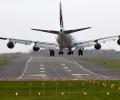
Parents of Kashmiri students studying in Iran have appealed to the Indian government to evacuate their children due to ongoing tensions and protests in the country. They cite difficulties in communication and travel arrangements.
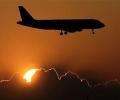
Domestic air passenger traffic in India decreased by 4.80 per cent in July 2026 compared to the previous year, reaching 1.20 crore, with major airlines experiencing a drop in load factor, according to DGCA data. Despite the overall dip, IndiGo and Air India Group increased their market share.

Regional Indian airline FLY91 has placed a significant order for 40 new ATR 72-600 turboprop aircraft, valued at nearly USD 1 billion. This marks the single largest order for ATR planes by a regional carrier globally and is set to dramatically expand FLY91's network, connecting more unserved and underserved cities across India. Deliveries are scheduled from late 2027 to 2032, supporting the airline's goal of operating over 60 aircraft.

Tewolde Gebremariam, Air India's CEO and MD-designate, has outlined passenger safety, operational reliability, and sustainable profitability as the airline's foremost priorities, emphasising a stronger safety-reporting culture and improved disruption recovery.
The operations of many global carriers, including Qatar Airways, have also been impacted due to the airspace curbs in the wake of the Middle East tensions.
Civil Aviation Minister K Rammohan Naidu announced that the government will not impose a cap on airfares during the upcoming festive season. Instead, airlines will be advised to maintain reasonable prices, considering the rising operating costs primarily due to increased Aviation Turbine Fuel (ATF) prices, exacerbated by the West Asia crisis.

Civil Aviation Minister K Rammohan Naidu announced India's ambition to produce its first indigenous civilian aircraft within two years through a joint venture. He highlighted the rapid growth of the country's aviation sector, with significant aircraft orders, planned new airports, and potential for manufacturing jet engines and Sustainable Aviation Fuel, underscoring India's increasing role in global aviation.

Two Maldivian pilots employed by flydubai have been arrested in the UAE in connection with an alleged attempt by an Omani co-pilot to hijack and crash a Dubai-Tel Aviv flight. The incident, which injured Indian Captain Smit Machchhar, is being investigated by UAE authorities and India's NIA, with the accused co-pilot suspected of extremist ideologies.

Authorities in Australia, Israel, and the UAE are investigating an Omani co-pilot's attempted "terrorist act" on a flydubai flight. The co-pilot, identified as Hamam al-Hammami, attacked the Indian captain with a crash axe, but passengers and reserve pilots managed to land the plane safely. The probe focuses on his motives, connections, and past radical views.

'India was the emirate's largest international source market by hotel guest volume.'

Air India has suspended a pilot after he failed a breath analyser test at Zurich airport, prompting the airline to reinforce stringent regulatory compliance and accountability measures following recent safety incidents.

An Omani citizen, Hamam al-Hammami, has been identified as the flydubai co-pilot who attacked Indian Captain Smit Machchhar and allegedly attempted to take control of a Dubai-Tel Aviv flight, which the UAE has now confirmed as a 'terrorist act'.

Airlines are cutting not only international services but also domestic flights, especially on routes projected to remain unprofitable in the coming weeks due to weak demand and high fares.
GE Aerospace is utilising artificial intelligence solutions, developed by its Bengaluru team, to significantly improve aircraft engine inspection, analytics, and maintenance. These innovations have reduced turnaround times by at least five days, enhancing engine durability, reliability, and time on wing, with specific tools like the AI-enabled Blade Inspection Tool cutting inspection times by 50%.

An Indian pilot and several passengers are being hailed as heroes after thwarting a co-pilot's alleged attempt to crash a flydubai flight en route to Tel Aviv. The incident involved a mid-air struggle, a rapid descent, and an emergency landing in Saudi Arabia, with international leaders praising the bravery that saved 174 lives.

The Indian government has approved the sale of a 60.72 per cent stake in IDBI Bank Ltd to Canadian billionaire Prem Watsa's Fairfax Financial Holdings Ltd for approximately 52,878 crore, a move that reflects improving India-Canada ties and marks a significant turning point for the bank.
